
Surprise Eggs Vending Machine
More Games


The part that actually trips people up
Most of the time, the “hard” part isn’t clicking the coins—it’s stopping yourself from guessing. The game flashes a price for the surprise egg you want, and your brain immediately goes, “Okay, close enough,” especially when you’re only off by one small coin.
What makes it interesting is that it’s basically a tiny exact-change puzzle every round. You’re not just adding numbers; you’re choosing a combination. Two different sets of coins can reach the same total, and the game quietly nudges you to notice patterns (like when you’re better off swapping two small coins for one bigger one).
It also has that vending-machine tension where you feel like you should be able to do it instantly… and then you get the error message and have to rethink it. The reset-and-try-again loop is fast, so you’ll often find yourself doing 5–10 attempts in a minute when you’re chasing a new egg.
How a round works (and the one-click controls)
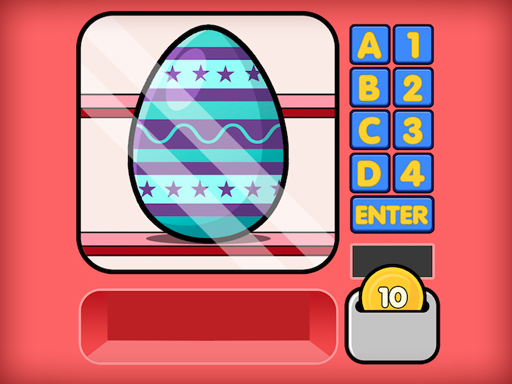
You’re looking at a vending machine with surprise eggs/items and a price displayed on screen. Your job is to “pay” that exact amount using the coins the game offers. Each coin click adds to your current total, and you keep building until you think you’ve matched the price.
When you submit the amount, one of two things happens: if you nailed it, the machine dispenses the egg and you add it to your collection. If you’re wrong, you get a message telling you the payment doesn’t match, and you’re right back to adjusting your coins.
Controls are as simple as it gets: it’s all click/tap. There’s no timer pressure in the moment, so the real skill is being careful and consistent. A small detail that matters: it’s easy to “overclick” and add an extra coin by accident on touch screens, so it helps to pause for half a second before confirming your total.
Progression: collecting eggs and rising prices
The game’s progression is basically your collection. Each time you pay correctly, you unlock a new surprise egg/item, and the machine gives you another price to solve. It feels a bit like opening blind bags: you’re doing the math because you want to see what pops out next.
Early on, the totals tend to be friendly—prices that can be made with obvious combinations. After a few successful purchases, the game starts asking for amounts that aren’t just “one big coin plus one small coin.” That’s where players usually slow down, because you have to do a little more planning instead of clicking whatever seems right.
A noticeable difficulty bump tends to show up once the prices stop ending in the same last digit over and over. When you start seeing totals that require three or four coins instead of two, mistakes happen more often—mostly because people forget to re-check the running total before hitting confirm.
Since the reward is tied to collecting, it naturally pushes you to keep going. Most play sessions end up being around 5–10 minutes at a time: long enough to unlock a handful of items, short enough that you can come back later and do a few more without feeling like you’re in the middle of a “campaign.”
Little tricks that make the math feel easier
If you’re missing the total a lot, the best fix is to build your amount in a predictable order. Start with the largest coin that doesn’t overshoot the price, then fill in the remainder with smaller coins. It’s the same idea as making change in real life, and it cuts down on random clicking.
Another thing that helps: pay attention to the “last step” coin. A lot of wrong answers happen because the total is correct except for the final small coin choice. If you’re consistently off by a small amount, don’t rebuild everything—swap one coin at the end. That tiny adjustment is usually faster than starting over.
When a price seems stubborn, try aiming for the remainder on purpose. For example, if the price is 37 (just as a style of number you’ll see), think “I need something that makes 7 at the end,” then build the rest. This keeps your brain from juggling the entire number at once.
A few quick habits that save time:
- Count out loud (even quietly). It sounds silly, but it reduces double-counting.
- After every 2–3 coin clicks, re-check your total before adding more.
- If you get an error twice in a row, pause and redo it using the big-to-small method.
And if you’re playing with a kid, letting them do the clicking while you do the “coach voice” (“Okay, we need 5 more… what coin makes 5?”) turns it into a nice little teamwork puzzle.
Who this one is for
This is a good fit for anyone who likes small, bite-sized puzzles and doesn’t want to deal with complicated rules. It’s basically repeated practice at matching a target number using coin pieces, with a collection reward attached so it doesn’t feel like a worksheet.
It’s also great for kids who are learning coin values, especially if they already understand basic addition but still hesitate when combining different coins. The instant feedback helps: you don’t just get told “wrong,” you get nudged to try again immediately, which is where the learning actually happens.
If you’re looking for something intense or competitive, this probably won’t hit that spot. But if you like calming “solve the next one” loops—and you get a small kick out of paying exact change and watching the machine dispense a prize—Surprise Eggs Vending Machine is an easy pick for a quick break.
Read our guide: The Best Puzzle Games Online
to leave a comment.