
Music & Rhythm Games

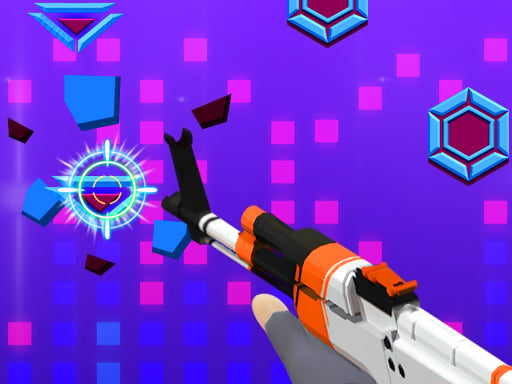
Beat Shooter 3D

Fnf Music Clash

Funny Pull the Beard

Magic Dot Rush

Marnyl Silence the Haters
Perfect Piano Magic

Space War Symphony
When Your Fingers Learn the Song Before Your Brain Does
Something strange happens around the third attempt at a difficult rhythm game track. Your fingers start hitting notes correctly a fraction of a second before your conscious mind registers what those notes are. Your motor cortex is pattern-matching from visual input to muscle output, bypassing the slower deliberative circuits. Neuroscientists call this procedural memory formation. Musicians call it "getting it into your hands." Rhythm game players just call it flow — the uncanny moment when the song plays you instead of the other way around.
This muscle-memory-first learning is the entire point of the genre. Rhythm games produce a state where conscious thought becomes an obstacle rather than an aid. The better you get, the less you think, and the less you think, the better you get. That paradox makes the genre distinct from everything else in gaming.
The Hands Know First
Perfect Piano Magic makes this phenomenon viscerally clear. Notes cascade down the screen and you tap in time. Early on, you read each note individually — a slow, conscious process. But within a few plays, your fingers begin anticipating patterns. A descending run, a syncopated triplet, a held note followed by a burst — your hands encode these as motor phrases, much the way a pianist learns a Chopin etude through repetition rather than analysis. QuilPlay hosts this title alongside six other rhythm games, and each one produces that same shift from reading to feeling.
When Conflict Has a Beat
FNF Music Clash layers competitive pressure on top of the rhythmic foundation. You trade musical phrases with an opponent, and the emotional stakes amplify the physical learning. Adrenaline accelerates procedural memory — your hands learn faster under mild competitive stress than in solitary practice. The same principle drives jazz cutting contests and rap battles: social charge sharpens the musical instinct.
Rhythm in Unexpected Places
Space War Symphony fuses rhythm mechanics with space combat. Shooting and dodging sync to a musical score, so survival depends on feeling the tempo rather than calculating trajectories. It reframes a familiar action structure as a musical one, revealing how many games already have hidden rhythms. The seven titles in QuilPlay's collection range from pure note-tracking to genre hybrids, but all share one conviction: the body is smarter than it gets credit for.
Do rhythm games improve real musical ability?
They build genuine skills in timing, tempo sensitivity, and pattern recognition. Music teachers note that students who play rhythm games develop a stronger internal sense of beat, which accelerates instrument learning.
What if I have no sense of rhythm?
Rhythm is a trainable skill, not a fixed talent. These games provide immediate feedback on timing accuracy. Most players who believe they lack rhythm discover within a few sessions that their sense of beat improves. Start with a slower track in your browser.
Can I play these music games without sound?
Technically yes, but sound is strongly recommended. Audio provides timing cues that vision alone cannot replicate. Headphones produce the best results. All seven titles are free to play.