
Puzzle Kids Jigsaw Puzzles
More Games


Color first, then the pieces start making sense
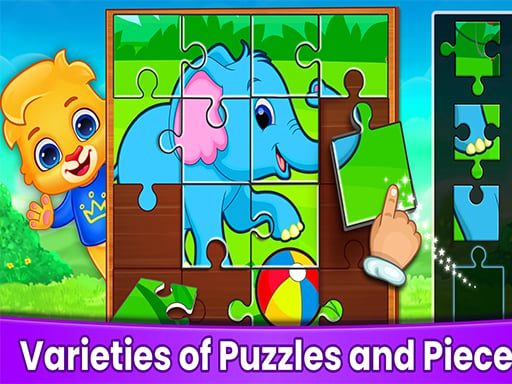
Puzzle Kids: Jigsaw Puzzles is a kid-focused jigsaw game where the whole point is finishing bright pictures one piece at a time. You pick an image, get a tray of pieces, and start snapping them into the board until the scene is complete.
The big draw is how “readable” everything is. Pieces are chunky, colors are loud (in a good way), and the game keeps the pace moving with quick feedback as you place parts correctly. It feels like a toy box version of jigsaws rather than a fussy, tiny-piece puzzle app.
Every puzzle is basically a small problem-solving loop: spot the piece, test the fit, lock it in, repeat. The learning sneaks in through repetition—shapes, edges, orientation, and that moment where a piece looks right but only fits when it’s rotated.
Controls and how a puzzle actually plays
Everything is mouse-based. You click a piece, drag it over to the board, and let go to place it. If it’s correct, it locks in and stays put, which is great for kids who get frustrated when pieces slide around after they “got it right.”
The basic flow is consistent across puzzles: choose an image from the menu, enter the puzzle screen, then work through pieces from the side tray. Most kids naturally start by hunting for obvious shapes or big color blocks—like a bright red shirt or a big patch of sky—because those pieces stand out immediately.
A good rhythm for finishing quickly is:
- Place the most obvious pieces first (big single-color chunks or recognizable objects).
- Fill around those anchors to grow the picture in sections.
- Save the “samey” pieces (like lots of green grass) for last, when the remaining empty spaces narrow down the options.
Difficulty: it ramps up without feeling mean
The game’s difficulty comes from puzzle size and piece complexity rather than any timer or strict move limit. Early boards are the kind you can finish in a couple of minutes because there are fewer pieces and the picture areas are bold and easy to separate.
As you move up, the puzzles start asking for more careful scanning. You’ll see more pieces in the tray at once, and the images get busier—more small color changes, more similar shapes. That’s where kids stop “guess-dragging” and start comparing: “Does this curve match that gap?”
One thing that feels really intentional: the jump between levels isn’t a cliff. The game usually increases complexity in small steps, so a child who’s comfortable finishing an easy puzzle won’t suddenly hit a wall. The time-to-finish changes a lot, though—those later puzzles can easily take 8–12 minutes if the picture has repeating colors (like lots of blue water or green leaves).
The cheerful sound effects matter here more than you’d think. When a piece locks in, it’s immediate confirmation, and that keeps kids willing to try again when a piece doesn’t fit. It turns the whole thing into quick attempts instead of long, careful debates.
What catches people off guard (and a tip that fixes it)
The surprise for a lot of kids is that “close” doesn’t count. A piece can look perfect next to a spot and still be wrong by just a tiny rotation. This game rewards tiny adjustments—especially once you’re past the easiest puzzles—because the right piece usually clicks in with zero wobble.
A simple tip that works almost every time: build anchors before you chase details. Instead of trying to place a random piece in a random hole, look for a piece with a really clear clue (a corner-ish shape, a strong outline, or a unique color patch). Once that anchor is in, the next 3–5 pieces around it become way easier because there are fewer possible gaps they can belong to.
Another thing adults notice right away: kids often ignore the tray organization. If a child is getting stuck, it’s usually because they’re re-checking the same five pieces over and over. A quick reset helps—scan the whole tray once, pick two candidates, try both, then move on. That little “try and rotate” loop is basically the whole skill the game is training.
Who it’s best for
This one is aimed squarely at young kids who like bright pictures and quick wins, especially preschool and early elementary ages. It’s also nice for families who want a calm puzzle activity that still feels active, because dragging pieces around keeps hands busy and attention locked on the screen.
It’s a good fit for short sessions. A lot of puzzles play well as a 5–10 minute break—finish one picture, get that completed image moment, then stop. And because the game doesn’t lean on reading, kids can usually figure it out with minimal help after one puzzle.
Parents helping from the side can make it even better by asking simple questions instead of giving answers: “What colors are in that empty space?” or “Do you see any other piece with that same curve?” It keeps the energy up while still letting the kid do the actual solving.
Read our guide: The Best Puzzle Games Online
to leave a comment.