
Bubble Pet Saga
More Games


Shoot at the bottom first (most people don’t)
The easiest way to lose in Bubble Pet Saga is to spend the whole level sniping at the top row because it “looks close.” That’s backwards. You want to remove the pieces that are actually holding everything up, because anything disconnected from the ceiling drops and counts as cleared.
A practical rule: if two shots can either pop a small group near the top or pop the “bridge” piece that connects a big chunk, take the bridge. On a lot of boards, one good support removal wipes 8–15 pets at once, while top sniping just makes a neat hole and leaves the mess hanging.
Also, stop firing the moment you see a guaranteed drop setup. People keep shooting because they’re on a roll, then they accidentally stick a bubble that blocks the only clean angle they had. One bad “extra” shot can cost the level.
- Prioritize shots that disconnect large clusters.
- Use the side walls when the direct line is blocked.
- If the next bubble color is useless, aim for a setup shot, not a random hit.
What Bubble Pet Saga actually is
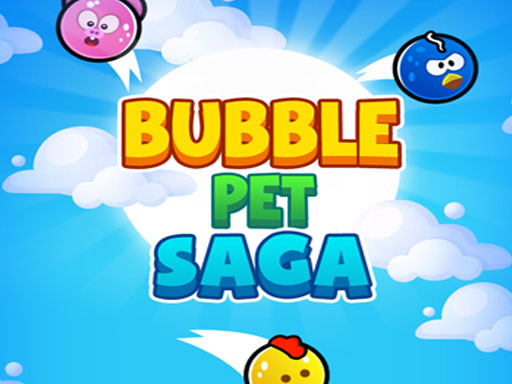
This is a level-based bubble shooter with cute pet faces instead of plain colored balls. Pets hang in a cluster from the top of the screen, and you fire new bubbles upward to match colors. Match three or more of the same pet type and they pop; anything no longer connected to the top drops too.
Each level is a little puzzle about angles and support points, not reflexes. Most clears are quick—once you know what you’re doing, a normal level takes around 2–4 minutes. The game says “adventure” in its vibe, but mechanically it’s simple: clear the pets with limited shots and move on.
There are 25 levels. Don’t expect a big twist halfway through. The main change is that the layouts get more awkward and the game becomes less forgiving about wasted bubbles.
Controls and how a turn works
It’s click/touch only. You aim the shooter by moving your pointer or finger, then click/tap to fire the current bubble. There’s no movement, no timers to manage, and no extra menus you need to babysit.
Every shot matters because you’re not firing endlessly. You get a limited number of bubbles to clear what’s on the board, so the real “resource” is accuracy and decision-making. When your bubble hits the cluster, it sticks in the nearest open spot. If that placement completes a group of three or more matching pets, that group pops immediately.
The walls are part of the puzzle. Bank shots off the left or right wall are often the only way to reach a pocket behind a wide block of other colors. If you’re missing those angles, you’ll keep creating little useless attachments on the front and wondering why nothing is dropping.
How it gets harder over time
The early levels are basically training wheels: big obvious color groups and easy drop opportunities. Around level 8–10, the boards start building wider “ceilings” where the only safe progress is carving a path or setting up a disconnect instead of popping whatever is closest.
The difficulty spike people notice is usually around the low teens (roughly level 12–15). That’s when you start getting more mixed colors in tighter spaces, so you can’t just shoot at the nearest match and expect a chain reaction. You’re forced to use banks more often, and you’ll feel the shot limit much more because three wasted bubbles can be the difference between a clean finish and a board with two annoying pets left.
Later levels also punish the common habit of “color chasing.” If you only shoot when you see an immediate match, you’ll run out of shots. Sometimes the right move is a setup shot: attach a bubble in a place that opens a lane, even if it doesn’t pop anything right away. You’re buying position.
Other stuff worth knowing (so you don’t get stuck)
Think in two layers: what you can pop now, and what will drop after that pop. A small pop can be valuable if it removes the last connector holding a big section. A big pop can be worthless if it doesn’t change the structure. Structural progress beats point-chasing.
Use a quick scan before you shoot. Look for “single connectors”—a lone pet or tiny pair that a whole chunk is hanging from. Those are the money targets. If you can remove one connector, you often clear half the screen in one shot. On some mid-game boards, the best clears happen when you remove a connector near the center rather than working the edges.
Don’t ignore awkward colors. If the next bubble color doesn’t have a clean match, don’t panic-shoot it into the largest group and make the cluster thicker. Place it somewhere that creates a future three-match or opens a corridor for a bank shot. This matters a lot when the board has a “roof” of mixed colors that blocks access to the useful underside.
Who this is for: people who like simple puzzle loops and don’t need extra systems. It’s not a long-form strategy game and it’s not action-heavy. If you enjoy lining up shots, using walls, and clearing boards efficiently, you’ll get what you came for. If you want power-ups every ten seconds or a story, you’ll run out of patience before level 25.
Read our guide: The Best Puzzle Games Online
to leave a comment.