
Christmas Tic Tac Toe
More Games



The most common mistake
Don’t ignore the center square. On a 3x3 tic-tac-toe board, the center is involved in four possible lines (one horizontal, one vertical, two diagonals), so giving it away early usually means spending the rest of the round blocking instead of building your own line.
The second common mistake is reacting too late to a “two in a row.” If the opponent places a second snowman/tree that creates an immediate 3-in-a-row threat, the next move has to be a block. Players often place a “nice-looking” piece elsewhere and lose on the following turn.
A practical habit is to scan the board the same way every turn: check rows, then columns, then diagonals. It takes a second, but it reduces missed blocks, especially when the board starts to fill.
What Christmas Tic Tac Toe actually is
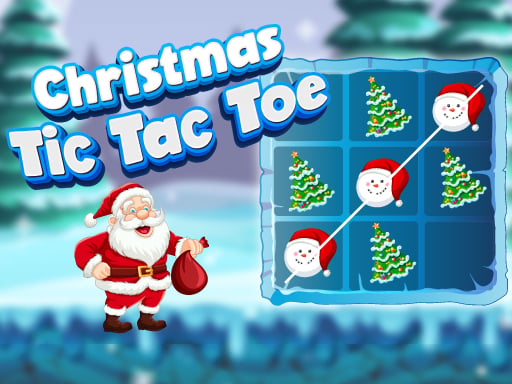
Christmas Tic Tac Toe is the standard tic-tac-toe ruleset presented with holiday visuals. Instead of Xs and Os, the pieces are themed (snowmen and Christmas trees), but the win condition is unchanged: make a line of three.
Rounds are short because the grid is only 3x3. A typical game ends in 5–9 total moves, which means most rounds take well under a minute once players stop hesitating. Because there are so few moves, early placement decisions matter more than they do in larger grid games.
The game is turn-based and deterministic: there are no random draws, no hidden information, and no timing pressure. If both sides play perfectly, many rounds will end in a draw, which is normal for tic-tac-toe.
It also tracks outcomes across rounds, so it works as a score-based back-and-forth game rather than a one-off puzzle. That makes it fit for quick rematches, especially in a casual head-to-head setting.
Controls and how a round works
On desktop, the input is mouse-only: select an empty cell on the 3x3 grid to place your symbol. On mobile, the same action is done by tapping a cell. You cannot place on an occupied square, so misclicks generally just do nothing.
Each turn consists of a single placement. After a piece is placed, the game checks for a completed line of three: horizontally, vertically, or diagonally. If a line exists, the round ends immediately and the winner is recorded.
If all nine cells fill without a completed line, the round is a draw. In practice, draws are common once both players learn to block basic threats, so the score display matters if you’re playing multiple rounds.
There is no piece movement or upgrading. The only actions are placing a snowman/tree and starting the next round after a win or draw.
How it gets harder over time
The board never changes size, so the difficulty increase comes from the opponent (or your own standards), not from new mechanics. The game tends to have a noticeable skill jump after the first few rounds, when players stop making single-move mistakes like leaving an obvious third square open.
Once basic blocks are automatic, the next layer is “fork” awareness. A fork is a move that creates two separate win threats at once, so the opponent can’t block both. On a 3x3 board, forks show up often when a player has the center plus a corner, or two corners arranged to set up dual threats. If you see the opponent building toward that shape, the correct response is usually preventative rather than reactive.
Another way rounds get harder is psychological: after a few games, players start repeating openings. If someone always opens with a corner, the counterplay becomes consistent, and the match shifts from single-round tactics to pattern recognition across multiple rounds.
As a rough expectation, new players often decide games on turn 5 or 6 due to a missed block. After a bit of practice, games more often go to turn 9 (a full board) and end in a draw unless someone manages a fork.
Other things worth knowing
There are a few reliable heuristics that apply specifically to this 3x3 ruleset. The first is move priority: if you can win this turn, do it; if the opponent can win next turn, block; otherwise, choose a move that creates a future threat while limiting forks against you.
Opening choices matter. Center is generally the strongest first move; a corner is the next best. An edge (non-corner side square) is usually weaker because it participates in only two possible lines, and it gives the opponent more freedom to take the center without immediate consequences.
If you are playing multiple rounds and keeping score, draws are not wasted time; they are the expected outcome when both sides play cleanly. The “goal” shifts toward capitalizing on the few rounds where the opponent slips rather than trying to force wins every time.
- If you take the center, watch the corners next. Corners are the easiest way for the other side to create fork setups.
- If the opponent has the center and you don’t, prioritize corners to reduce their ability to form two threats at once.
- When you already have two in a row, place the third immediately if it’s open. Don’t try to set up a different line instead.
Quick Answers
Why do so many rounds end in a draw?
On a 3x3 grid, both players can block threats quickly, and there are only nine total moves. If neither side misses a forced block and forks are prevented, the board fills and the round ends tied.
What is the best first move?
The center is usually the best opener because it is part of four winning lines. If the center is not available (or you prefer a different start), a corner is typically stronger than an edge square.
Read our guide: The Best Puzzle Games Online
to leave a comment.