
2 Player Online Chess
More Games


The whole point: make one good move after another
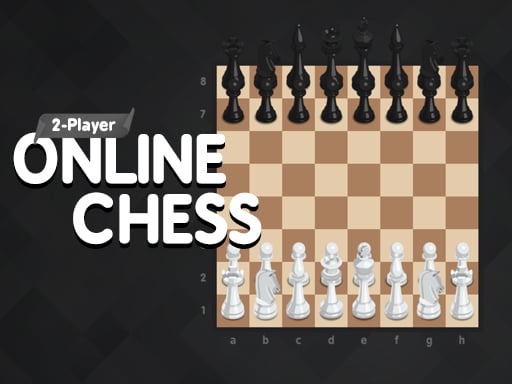
You click a pawn, it lights up the legal squares, and suddenly you’re in that familiar headspace: “If I go here, what do they do next?” 2 Player Online Chess keeps it clean—just a standard board, standard rules, and the pressure of not hanging your queen.
It’s set up for either a quick match against the computer or a back-and-forth game with another person. The fun part is how fast it gets serious. Two calm opening moves, then one tempo loss and you’re defending for the next ten minutes.
Most games land in that 10–20 minute range if both sides play at a normal pace. But if someone blunders early (it happens), you can see a checkmate threat by move 8–10 and it turns into a scramble.
The game also works well as a practice board. Because moves are enforced, you don’t waste time arguing about legality—if a square isn’t highlighted, you can’t go there. That makes it easy to focus on planning instead of policing the rules.
Controls that stay out of your way
The controls are mouse-first, touch-friendly, and they do what you want them to do. Select a piece and you’ll get the legal destinations. Pick a destination and the move happens—no extra confirmation screens slowing things down.
On desktop, it’s basically two actions: click a piece, then click a square. If you prefer dragging, that works too, but clicking tends to be faster when you’re calculating lines and don’t want to mis-drop something.
On mobile or tablet, it’s tap-to-select and tap-to-place. The board is readable enough that you can play a real game, not just poke around. One small habit that helps: always tap the piece first even if you think you know the move—seeing the highlighted squares prevents accidental “almost the right move” slips, especially with knights.
Captures are automatic: move onto an opponent’s piece and it’s taken. Promotions come up when a pawn reaches the back rank, and you’ll typically choose the new piece right away (most of the time it’s a queen, but underpromotions matter more often than people think—especially when you’re trying to avoid stalemate).
Progression: friend matches vs AI difficulty steps
This isn’t a level-based game with maps and unlocks. The progression is more about who you’re facing and how sharp you want the match to be. Against a friend, the “difficulty curve” is whatever the two of you bring to the board—one player might play solidly for 30 moves, then collapse in a rook endgame.
Against the AI, the ramp is the main progression. Lower settings feel like they’ll give you chances: the computer will miss a fork here and there, and it won’t always punish a loose piece immediately. That’s perfect for learning openings and basic tactics without getting crushed for one tiny inaccuracy.
Turn the difficulty up and the tone changes. The AI starts snapping at hanging pawns, trades when it benefits, and it spots simple tactical shots fast—things like a discovered attack on your queen or a back-rank mate idea after you get greedy. A common experience is feeling fine for the first 10–15 moves, then realizing you’re down a pawn with no compensation because you ignored one threat.
If you want a practical “stage” plan: play a few AI games focusing only on not blundering pieces in the first 12 moves. Then replay at a higher difficulty and see how often the same bad habits get punished. It’s a real, noticeable step up.
Tips that actually win games here
The board is simple, so the advantage comes from fundamentals. First: develop with a purpose. If you’re moving the same piece three times in the opening while your opponent is bringing out two knights and a bishop, you’ll feel it when the center opens.
Second: castle earlier than you think you need to. A ton of games against human opponents swing because one king sits in the center until move 12, then suddenly there’s a check that also wins a rook. If you’re unsure which side to castle, default to king-side and keep it safe unless the position clearly calls for something else.
Third: play with threats, but count the reply. The interface makes it easy to get hypnotized by “ooh, I can take that pawn.” Before you grab anything, do a quick two-question check:
- What is my opponent’s most forcing move next (check, capture, threat)?
- If I make my move, what piece becomes loose?
A very specific pattern that wins a lot at casual levels: watch for knight forks on f7/f2 and e6/e3 squares once the center pawns move. If you see a knight hop that checks the king and hits a rook, it’s usually not an accident—stop it by controlling that square or moving the target.
Endgames matter here because matches often simplify. If queens come off early, don’t switch off. Rook endgames in particular show up a lot, and one extra pawn can be enough if you keep your rook active. A good rule: in rook endgames, rooks belong behind passed pawns—either yours (to push) or theirs (to stop).
Mistakes people keep making (and how to punish them)
The number one mistake is leaving pieces hanging because the player only looked at their own plan. You’ll see someone attack your bishop, you save it, and then you realize their queen was undefended the whole time. Make it a habit to scan the board after every move for “free” captures—especially on diagonals that just opened up.
Another classic: pushing too many pawns in front of the king. It feels aggressive. It also creates permanent holes. If someone plays g-pawn or f-pawn moves early without a clear reason, you can often aim a bishop and queen at those dark squares and start a direct attack. Even if it doesn’t mate, it usually wins material because the king has no safe squares.
People also trade without thinking. “If I can capture, I should capture” is how you end up exchanging your active bishop for a knight that wasn’t doing anything, then getting stuck with bad pawns. When you’re offered a trade, ask: does this help my worst piece, or does it help theirs?
One more that shows up a lot in friend games: rushing the queen out and trying for a cheap mate. If the opponent goes queen early, meet it with simple development and don’t chase it with pawns unless you’re gaining tempo safely. Usually the queen ends up forced to retreat, and the early-queen player falls behind in development around move 6–8.
Who this one works for
This is a good pick for anyone who wants chess without extra stuff layered on top. No gimmick rules, no distracting animations—just a board you can actually think on. That makes it great for quick sessions, especially if you want to play one serious game instead of ten tiny mini-games.
It’s also friendly for learning. Legal-move highlighting stops the most frustrating beginner problem (illegal moves), and the AI settings let you find a level where you can practice tactics without every mistake becoming instant disaster.
Competitive players will still get value out of it as a warm-up board: run an opening line, test a plan, or play a sharp game against a friend and see who keeps it together in time trouble. Just don’t expect the game to teach you openings on its own—it gives you the space to learn, but you bring the studying.
If you like clean multiplayer board games and you don’t mind losing a few queens along the way, 2 Player Online Chess is the kind of simple setup that keeps you clicking “one more game.”
Read our guide: The Best Strategy Games in Your Browser
to leave a comment.