
Push Crowd All
More Games





The part that gets you: momentum and tiny edges
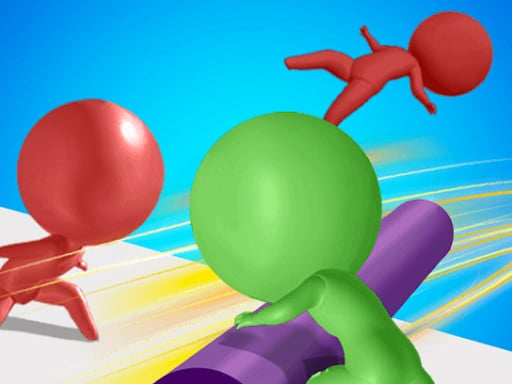
The first time Push Crowd All really clicks is also the first time it punishes you. You line up a clean shove, the whole crowd slides… and then your own character skates a half-step too far and drops off the tower. The game looks like pure arcade pushing, but the real fight is against momentum and space.
Every platform is basically a small ring with a lot going on. Crowds bunch up, bump into each other, and create surprise “walls” that stop you from escaping. If you get pinned near an edge, it can turn into a quick panic spiral: you push to make room, you bounce back, you drift, and suddenly you’re the one falling.
It’s interesting because it’s not about landing one perfect hit. Most levels are about cleaning up the leftovers. After the first big shove, you’re usually dealing with two or three stragglers in awkward spots, and that’s where the risk spikes hard.
How it plays (and what the mouse actually does)
You control a simple stick character with the mouse. Dragging steers your movement around the platform, and contact is the “attack.” There’s no separate push button—your body is the battering ram, and your angle is the weapon.
The key is that pushing isn’t instant. When you make contact, you’re committing to a little slide of your own, especially if you hit a dense crowd. That’s why the game feels fast even in quiet moments: you’re constantly making micro-decisions about where you can afford to drift.
A typical level rhythm goes like this: circle to find a safe approach, hit the outside edge of a cluster, then immediately peel away before the rebound carries you somewhere dumb. When you’re doing it right, you’re always moving, but you’re never “charging” straight through the middle for long.
- Mouse drag = move your character around the platform
- Touch crowds to shove them
- Win by knocking every obstacle off the tower
- Lose if you fall off
Levels, pacing, and where the difficulty spikes
Push Crowd All is built around short stages that reset quickly. Most early clears take under 20 seconds once you understand the angles, but later levels stretch longer because the crowds don’t cooperate. You’ll spend more time separating groups and avoiding getting boxed in.
The progression mostly comes from platform pressure. You start with roomy space and forgiving crowd layouts. Then the game starts placing clusters closer to the rim, or setting you up with multiple groups that can collide and form a moving barrier. Around the mid levels, the “last two enemies” problem becomes the main problem—those final targets tend to hug the edge in spots that punish greedy pushes.
Another noticeable shift is how often you’re forced to work near danger zones. Early on, you can play like a vacuum cleaner from the center outward. Later, you’re constantly flirting with the edge because the crowds spawn in positions that already threaten to fall, and one wrong nudge can drag you with them.
It’s also a game where failure doesn’t feel like you lost to stats. It feels like you got impatient. That makes restarting weirdly motivating, because the fix is usually obvious: “I shouldn’t have taken that angle,” or “I should’ve split them first.”
Small tricks that keep you alive
The safest pushes are the ones where your exit path is already open. Before you bump a crowd, glance at where you’ll go after contact. If the only “escape” is toward the edge, don’t take it—rotate around and hit from a side that lets you drift back into open space.
One practical rule: don’t push straight down the middle of a tight cluster unless you’re sure it will collapse outward. Dense groups can behave like a single heavy block. You hit it, it slides a little, and then you’re the one stuck against it with no room to turn.
When you’re down to a couple of enemies, slow down. Those last cleanups are where most runs end, because you start playing like the level is already won. If a lone target is near the rim, tap it from a shallow angle and then back off—two light nudges are safer than one big shove that carries you over.
- Circle first, push second: line up an approach that leaves you room to retreat.
- Favor side hits: pushing from the flank keeps your own momentum from going off the platform.
- Break up crowds: if two groups are close, separate them so they can’t pin you.
- Treat the edge like lava: even when you’re winning, avoid hanging out near it.
If you keep losing the same way, pay attention to your mouse movement. Big, fast drags tend to cause oversteer, and that’s how you “accidentally” slide off after a successful push. Shorter adjustments keep your character from skating into danger.
Who this one is for
Push Crowd All fits people who like quick arcade rounds but still want a bit of puzzle thinking. It’s not about memorizing combos or grinding upgrades. It’s about reading space and making clean decisions under pressure.
It’s also great for short sessions. Levels are bite-sized, restarts are instant, and you can play it like a “one more try” game without needing to warm up. When you have a spare five minutes, it’s easy to get a handful of attempts in and feel yourself improve.
Players who hate losing to slippery physics might bounce off it at first, because the movement has that slightly floaty shove-and-drift feel. But if you like games where you learn to respect momentum—and you don’t mind laughing at a win turning into a faceplant—this is exactly that kind of fun.
Read our guide: The Best Puzzle Games Online
to leave a comment.