
Parking
More Games


The whole game is a traffic jam, and it doesn’t let you cheat
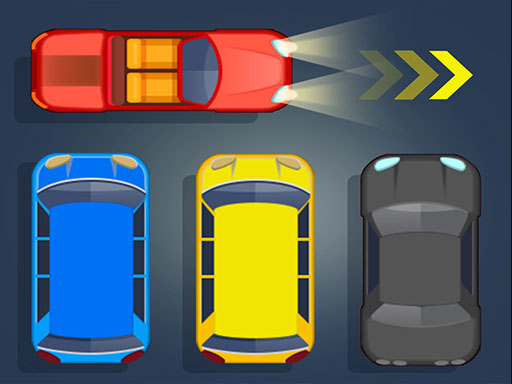
This is the kind of puzzle where the board looks impossible on purpose. You’re staring at a packed Parking lot and your job is to get one specific vehicle out through the exit. The catch is that every other car, bus, and trailer is blocking something, and you can’t just “turn” vehicles or squeeze past corners.
Vehicles only slide in a straight line. If a car is parked horizontally, it can only move left and right. If it’s vertical, it only goes up and down. That single rule is what makes the layouts nasty, because a vehicle that’s “one space away” from being helpful might need three other vehicles moved first just to create that one space.
The game’s difficulty comes from chain reactions. You rarely solve a level by moving the blocked car directly; you solve it by freeing a blocker, which frees another blocker, which finally gives your target vehicle a clear lane. When you’re stuck, it’s usually because you’re trying to force the last step without setting up the earlier steps.
Also, the bigger vehicles matter. Long buses and trailers take up so much room that they act like walls. They’re often the key piece that has to shift exactly two or three spaces, not “as far as possible,” or you’ll lock yourself out and have to unwind moves.
How it plays (and what you actually do with the controls)
Each level is one Parking grid with an exit on one side. Your goal is simple: slide vehicles until the marked vehicle can drive straight out. There’s no fuel, no timers, no speed. It’s pure positioning.
Controls are just drag-and-slide. Click or tap a vehicle and drag it along its allowed direction. If there’s empty space, it moves; if another vehicle is in the way, it stops. You’ll find yourself making lots of tiny one-space adjustments, especially in the midgame levels where the board is tight and every space matters.
What the game doesn’t do: it doesn’t rotate vehicles, it doesn’t let you hop over other cars, and it doesn’t let you “nudge” something diagonally. If you’re thinking in terms of turning a corner, you’re already on the wrong track. Think of each vehicle as a drawer that only opens and closes.
A typical solve is short when you see it and annoying when you don’t. Many early levels are done in under 15 moves. Later levels can easily take 40–60 moves if you’re feeling it out, and that’s with a couple of backtracks because you slid a bus one space too far.
Level structure: 100 puzzles, and the game ramps up the clutter
The game leans on volume: around a hundred levels, with layouts that steadily get more cramped. Early puzzles are basically tutorials disguised as levels. They teach you the obvious stuff: “move the car blocking the exit,” “vertical pieces can’t help with horizontal lanes,” that kind of thing.
Then the game starts stacking dependencies. Around the late teens to mid-20s, you’ll notice a shift: the target vehicle isn’t blocked by one piece anymore, it’s blocked by a piece that’s blocked by two other pieces. That’s where people start making random moves because the correct first move doesn’t look correct yet.
Midway through, the boards tend to include more long vehicles (buses/trailers) that pin down entire rows or columns. Those levels feel harder because you have fewer “free” cars to shuffle for space. The game also gets meaner about fake-outs: it will offer you a move that seems to open the exit lane, but doing it too early traps the only vertical piece that could have created the final gap.
There’s no story and no extra modes. It’s just level after level. That’s fine here, because the point is to solve a Parking jam and move on, not to collect anything.
Tips that actually help when the board feels locked
Stop staring at the exit. Seriously. If you only focus on the lane your car needs, you’ll miss the real problem: the “space makers” are usually on the far side of the grid, creating empty cells that eventually get traded toward the exit row/column.
Try working backward from the final position. Ask: what has to be true for the target vehicle to leave? Usually it needs a clear run of 2–4 empty spaces in front of it. Then ask what has to move to create those spaces, and what has to move to free that mover. It sounds obvious, but it prevents the classic mistake of sliding random cars just because they can slide.
A few practical habits make a big difference:
Don’t max-slide everything. Moving a vehicle “as far as it can go” is often wrong. Many levels require leaving a one-space gap for another car to tuck into later.
Track the one flexible column/row. Most hard levels have one column (or row) that acts like a buffer, where cars can shuttle to create temporary space. If you find that buffer, protect it.
Count lengths before you commit. A trailer that’s length 3 needs three empty cells in line to fully clear a lane. If you only have two, you’re setting up a move that can’t finish.
Undo mentally before you dig deeper. If a move doesn’t create new space anywhere, it’s probably just noise. Productive moves either open a new gap or relocate a long vehicle into a less harmful spot.
One more blunt truth: sometimes you have to “waste” moves to reposition a blocker into a temporary holding spot. If you refuse to move a car away from the exit lane because it feels like progress, you’ll stall out. The game expects you to move pieces out of the way even when it looks like you’re going backward.
Who this is for (and who will bounce off)
This suits people who like clean logic puzzles and don’t need extra rewards. If you enjoy sliding-block puzzles, Rush Hour-style setups, or any game where the answer is a move order, you’ll be fine.
It’s also decent for short sessions. A lot of levels are quick once you understand the pattern, and failing doesn’t cost anything except your patience. You can solve one puzzle, close the tab, come back later, and you haven’t forgotten a storyline.
If you want action, this isn’t it. There’s no driving physics, no timing pressure, and no “arcade” in the reflex sense. The arcade part is really just the quick restart-and-try-again loop.
And if you hate puzzles that make you feel stuck, you’re going to get annoyed around the middle of the level list. The game starts demanding multi-step setups, and it won’t hand you hints. That’s the point.
Read our guide: The Best Puzzle Games Online
to leave a comment.