
Magic Action Gun Game

More Games


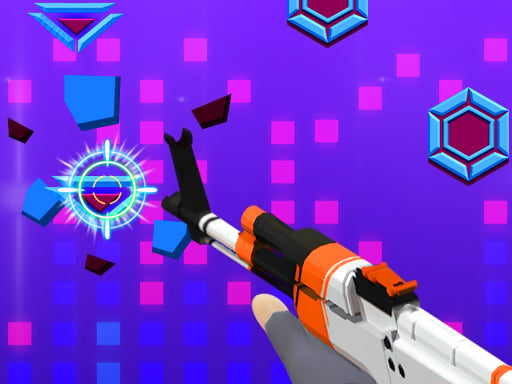




Where it sits in shooting games (and what it tweaks)
A lot of arcade shooters in this lane are really about one thing: keep moving, keep firing, and don’t overthink it. This one still has that forward momentum, but it keeps pulling your attention back to the gun itself—what it’s made of, what it can become, and whether your current loadout is actually suited to what the next stretch is throwing at you.
The “runner with targets” rhythm is familiar: lanes of breakable obstacles, enemies that pop in just long enough to punish hesitation, and a steady pressure to clear what’s in front of you. What’s different is the merge loop sitting under the action. Instead of picking up a single weapon and riding it until it’s replaced, you’re nudged into treating guns as components—things you combine, improve, and sometimes sacrifice for a cleaner upgrade path.
That shift changes the feel of decision-making. In many run-and-gun games, speed is the default virtue. Here, the design quietly rewards patience: taking an extra beat to finish off a stubborn obstacle can be the difference between reaching the next merge breakpoint or limping into it with an underpowered firearm.
The minute-to-minute loop and the one-button control
The controls are as simple as they come: left mouse click fires. There’s no separate aim mode to fuss with and no reload key to remember, which is partly why the game can afford to make the environment a little busier. Your job is mostly about choosing what to shoot first and keeping a steady firing rhythm as the run continues.
Most of the time you’re shooting to clear. Obstacles block progress and soak up bullets, and targets/enemies act as quick checks on whether your current weapon is keeping up. Early on, almost any pace of clicking works. A few runs in, the game starts “asking” for consistent fire—short pauses matter because some objects take just long enough to break that you’ll feel the lost seconds.
The merge-and-evolve layer shows up as you unlock and assemble weapons from pieces. The practical takeaway is that the gun you have isn’t just a damage number; it’s also a tempo change. A higher-tier firearm tends to smooth out the run because fewer clicks are wasted on high-health blockers.
A small but real piece of texture: most runs settle into a 2–4 minute range once you know what you’re doing. That length is long enough for upgrades to matter, but short enough that experimentation doesn’t feel like a chore.
Progression: the spike you feel, and why it happens
The game’s progression curve is less about new mechanics and more about tighter margins. Early stretches let you brute-force obstacles with constant clicking. Later, the same obstacles become time sinks unless your weapon has kept pace through merging and evolution.
The first noticeable difficulty bump usually lands around the point where enemies start showing up in clusters instead of single, clean targets. Suddenly, “good enough” damage stops being good enough, because you’re splitting your attention across multiple threats and still trying to keep the lane clear. If your merge decisions were messy—keeping too many low-tier pieces instead of consolidating—you feel it right here.
There’s also a subtle pacing change as you unlock more powerful weapons. Stronger guns make the front half of a run easier, but the game responds by putting more durable obstacles in your path. It’s not a perfect one-to-one scaling; it’s more like the game is testing whether you’re upgrading consistently or just enjoying a temporary power spike.
One detail that stands out compared to pure reflex shooters: “winning” a segment often comes down to sustained damage over time, not burst damage. In practical terms, steady clicking often outperforms frantic clicking with gaps, because the gaps are what let tougher blockers steal your momentum.
A detail most players miss: merges are also about tidiness
It’s easy to think of merging as a simple rule—combine pieces, get a better gun, repeat. But the real advantage is how merging reduces clutter in your build path. Keeping your inventory of parts and guns tidy (consolidated into fewer, higher-tier items) makes your next upgrade more predictable, and predictability matters when the run is already demanding your attention.
Many players also miss how much “wasted shooting” costs them. If you keep peppering a high-health obstacle while a low-health enemy is about to slip past, you’re trading a guaranteed clear for a risky one. The game rarely says this out loud, but the priority order that tends to work is:
- Enemies that can end the segment quickly
- Obstacles that block your forward line
- Extra targets that are safe to farm once the lane is stable
Another small thing: the best time to think about weapon evolution is between threats, not during them. When a new piece drops or an upgrade becomes available, it’s tempting to fixate on it immediately. The run doesn’t really give you a safe pause, so training yourself to “finish the lane first, optimize second” prevents a lot of avoidable losses.
If you pay attention, you can feel the game nudging you toward this mindset. The moments that punish you hardest aren’t when you aim poorly—they’re when you aim fine but choose the wrong problem to solve first.
Who this one clicks with
This is a good fit for players who like shooters but don’t want a pure twitch test. The one-button firing keeps the entry barrier low, and the merge system adds just enough planning to make runs feel like they have a story: a weak start, a mid-run upgrade, and a late stretch where you find out if your weapon is actually ready.
It also suits people who enjoy “small optimizations” more than huge build spreadsheets. You’re not managing ten stats at once, but your choices still leave fingerprints on the run. If you’re the kind of player who notices that a slightly stronger gun changes which obstacles you can ignore—and which ones you absolutely can’t—this game has room for that attention.
Players looking for deep manual aiming or complex movement won’t find it here, because the design is built around firing rhythm and upgrade timing. But if you like the idea of an arcade shooter where your best advantage is a clean upgrade path—and the discipline to shoot the right thing first—Magic Action Gun Game understands that appeal.
Read our guide: Action Games: A Beginner's Guide
to leave a comment.